
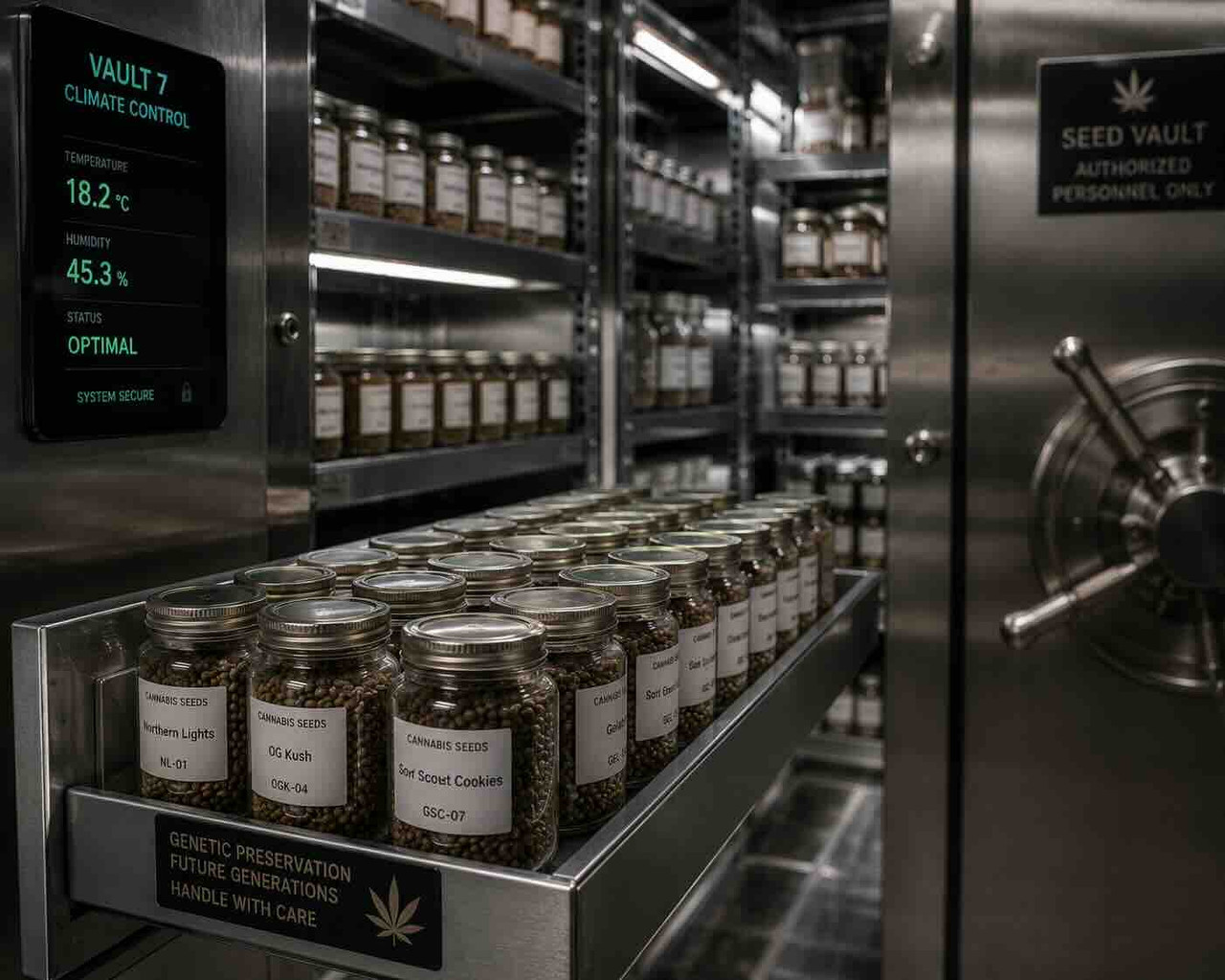
Germination is the first and most important stage of the cannabis lifecycle. As a breeder, I often tell growers that a healthy harvest begins long before the first leaves appear. Strong genetics certainly matter, but even the best seed can struggle if germination conditions are poor. Fortunately, successful germination does not require complicated equipment or expensive products. What it requires is consistency, patience, and an understanding of what a seed needs to begin life.
Every viable cannabis seed contains the genetic blueprint for an entire plant. During germination, moisture, temperature, and oxygen activate biological processes that allow the embryo inside the seed to emerge and begin developing a root system. Mistakes during this stage can reduce vigor and delay growth before cultivation has even started.
Growers who understand proper germination techniques generally achieve faster, more uniform, and more reliable results.
Understanding Seed Viability
Before discussing germination methods, it is important to understand seed quality. Healthy cannabis seeds are usually firm, mature, and properly stored. Although appearance alone cannot guarantee viability, immature or damaged seeds often produce weaker results.
As a breeder, I pay close attention to seed development because strong germination rates are one of the clearest indicators of quality genetics and proper seed production. Even under ideal conditions, however, every seed still requires the correct environment to begin growing.
This is why storage conditions matter. Heat, moisture, and direct light can gradually reduce seed viability over time.
The Conditions Seeds Need to Germinate
Cannabis seeds require three essential elements to germinate successfully: moisture, oxygen, and warmth. Water activates metabolic processes inside the seed, while oxygen supports respiration. Suitable temperatures encourage healthy development and help the seedling emerge efficiently.
Many beginners focus exclusively on moisture and forget that seeds also need air. Excessive water can reduce oxygen availability and create conditions that slow development or encourage rot.
The goal is a consistently moist environment rather than a saturated one. Healthy germination occurs when moisture and oxygen remain in balance.
Growers evaluating different genetics often compare options through Ministry of Cannabis. Regardless of cultivar selection, the biological requirements for germination remain essentially the same.
Popular Germination Methods
Several germination techniques are used successfully by growers around the world. The paper towel method remains popular because it allows growers to observe progress directly. Seeds are placed between moist paper towels and kept in a warm location until roots emerge.
Direct sowing is another common approach. Seeds are planted directly into their growing medium and allowed to germinate naturally. Many growers prefer this method because it reduces handling and minimizes the risk of damaging delicate roots.
Starter cubes and propagation plugs provide a compromise between observation and convenience. These products create a stable environment while simplifying transplantation later.
As a breeder, I have used all of these methods successfully. The best choice often depends on personal preference rather than any universal superiority.
Common Germination Mistakes
The most common mistake is overwatering. Many growers assume seeds require large amounts of water, but excessive moisture often creates more problems than benefits.
Another frequent error is exposing germinating seeds to unsuitable temperatures. Cold conditions can slow development significantly, while excessive heat may damage sensitive tissues.
Handling newly emerged roots carelessly is another avoidable problem. Young taproots are extremely delicate and should be disturbed as little as possible.
Impatience also causes issues. Some seeds germinate rapidly, while others require additional time. Constantly checking, moving, or manipulating seeds often creates unnecessary stress.
Successful growers usually provide stable conditions and allow the seed to develop naturally.
Transitioning from Germination to Seedling Growth
Once the taproot emerges and the seedling establishes itself, attention shifts toward early growth. Environmental stability remains important because young seedlings are still vulnerable to stress.
Gentle lighting, appropriate moisture levels, and healthy root-zone conditions support strong development during the first weeks of life. This stage often determines how vigorously the plant will perform later.
Many cultivation problems can be traced back to mistakes made during germination and early seedling development. Strong starts frequently lead to stronger plants overall.
For this reason, experienced growers treat germination as a critical stage rather than a simple preliminary step.
Final Thoughts
Learning how to germinate cannabis seeds properly is one of the most valuable skills a grower can develop. Successful germination requires only a few basic principles: quality seeds, stable moisture, sufficient oxygen, appropriate temperatures, and patience.
Reliable information about cannabis cultivation trends and industry developments can be found through https://merryjane.com, but practical experience remains the best teacher. Every successful harvest begins with a healthy seed, and every healthy seed deserves the best possible start.
As a breeder, I have learned that growers who master the fundamentals of germination consistently build stronger cultivation projects from the ground up. Start well, and everything that follows becomes easier.