Transforming Retail Experiences with Customizable White Label POS Solutions

Introduction to White Label POS

In today’s competitive retail landscape, businesses are increasingly turning to white label POS systems as a means to enhance their operations. These customizable solutions allow retailers to brand and implement point-of-sale systems without the need for extensive development resources.

Benefits of Using White Label POS

One of the primary advantages of white label POS solutions is their flexibility. Retailers can tailor the software to fit their specific needs, ensuring that the features align with their business model. Whether it’s adding unique payment processing options or integrating inventory management systems, a white label POS can be designed to enhance customer experience and operational efficiency.

Cost-Effectiveness and Time Efficiency

Adopting a white label POS system can be a cost-effective strategy for businesses of all sizes. Instead of building a system from the ground up, retailers can leverage existing technology, significantly reducing development time and costs. This allows businesses to focus resources on other critical areas, such as marketing and customer service.

Enhancing Customer Experience

Customizable white label POS systems also contribute to an elevated customer experience. With personalized branding and tailored features, retailers can create a seamless shopping experience for consumers. Whether it’s through loyalty programs or specialized checkout processes, these systems can help in building stronger customer relationships.

Conclusion

The shift towards white label POS solutions is revolutionizing how retailers manage transactions and engage with customers. By offering a blend of customization, efficiency, and branding opportunities, businesses can better position themselves in an ever-evolving retail market. To learn more about implementing a tailored system, consider exploring White label POS options that align with your business goals.

Continue Reading

Level Up Your Diablo 4 Lord Of Hatred Gear Fast And Buy Cheap D4 Gold

Welcome back to Sanctuary fellow demon slayers. The Lord of Hatred expansion has brought a massive wave of new mechanics to the game, and a lot of players keep asking about the best ways to handle gear progression. Specifically, the transfiguration system is causing a lot of confusion. What should you do with your items? Which tuning prisms are actually worth your time? I can tell you right now that transfiguring your gear is incredibly powerful. It hands you free extra stats and power-ups that can completely change how your build performs. If you are ignoring this system, you are leaving a massive amount of damage on the table.

Before we get too deep into the mechanics, let us talk about preparation. You want to have a working setup first. Once you have a bunch of materials saved up, I recommend throwing your stuff into the transfiguration system only if you know you do not want to imprint it again. Imprinting can take a long time until you get the aspects with a high enough roll. I see people running around with a low-rolled aspect, they transfigure their gear, and then they are stuck because they cannot imprint it later. Be careful with that order of operations. To speed up this entire process, many players choose to buy Diablo 4 items and gold from MTMMO.COM to get the exact base items and resources they need without the endless grind.

Timing Your Upgrades Perfectly

Let us break down exactly how this process works. You only want to transfigure an item after you have done everything else to it. You masterwork it, you temper it, you add your gems. You do all of those steps first. Then, you go to transfigure it. Why? Because transfiguration has a very high chance to turn the item unmodifiable. This is the absolute last step you take in your crafting journey. If you need a solid foundation before you start investing materials, you should definitely check out the comprehensive Diablo 4 Season 13 best class builds and tier list for Lord of Hatred to see which setups are currently dominating the endgame.

When you hit that transfigure button, there is a chance it can trigger multiple outcomes at the same time, provided it does not immediately lock the item. Some of these outcomes are insanely good. You can get extra greater affixes, which is just free stats. You can also add entirely new modifiers. If you look at the transfigured mods pool, there is a bunch of great stuff for any armor piece. We are talking willpower, flat armor, resistances, crit chance, attack speed, main stat, and elemental stats. Resource generation modifiers can be absolutely wild for certain builds that stack resources. It is basically free power.

Diablo 4 Class Tier List and Rankings

The Amulet Situation and Tuning Prisms

In the past, back in Season 11, this feature was called sanctification and had crazy mythic effects. That is all gone now. The only thing that resembles the old system is the amulet specific tuning. On the amulet, you have a special tuning prism called the Koolen Tuning Prism. This specific item allows you to add an extra utility aspect. The best part is you can reroll this as much as you want. It only pulls from the utility aspect pool, but most classes have something highly useful there. For example, grabbing extra ferocity for a flat 20% attack speed bonus is a huge win. If you want to skip the hassle of farming for the perfect amulet base, you can always find the best Diablo 4 equipment and legendary items for your build online to jump straight into the fun part of the game.

However, there is a known bug right now with the Koolen Tuning Prism. If you have a legendary amulet and you imprint over a Koolen-tuned amulet, the extra legendary mod will disappear and you cannot add it again. The game is supposed to let you modify the item still, but it bugs out. So, for now, only do this on unique necks or if you already have a perfect imprint on your legendary that you will never change.

The Power of Gem Strength

Now let us talk about the Entropic Tuning Prism. The tooltip says it removes the riskiest but also the most powerful outcomes, and then has a 100% chance of locking the item. Honestly, never use this. The chance of a risky outcome ruining your item is incredibly low. The only bad thing that can happen is replacing an affix you actually wanted. Realistically, if you brick an item, you just get a new one. The powerful outcomes you miss out on are too good to pass up.

The most important powerful outcome is Gem Strength. This is where the real damage comes from. We have new tiers of Horadric gems now, and they provide massive stats. A high-tier gem can give you 150 main stat. With Gem Strength on a helm, that gets multiplied. You can have two of these gems, resulting in 600 extra main stat, which you can then masterwork even further. On a two-handed weapon, this effect is doubled. You can reach 250% gem strength. If you slot in elemental damage gems, you can get over 120% extra elemental damage multiplier just from having this transfiguration on a two-handed weapon. It is absolutely bonkers and will carry your entire build's damage output.

Continue Reading

The Hidden Profit Potential in Selling Tradelines

Understanding Tradelines and Their Market

Tradelines are accounts listed on a credit report, detailing the history of credit usage. They play a crucial role in determining credit scores and can significantly impact an individual’s financial standing. Selling tradelines has emerged as a lucrative niche in the financial services industry, offering both sellers and buyers unique opportunities to enhance credit profiles.

What Does Selling Tradelines Involve?

Selling tradelines typically involves allowing another individual to be added as an authorized user on a credit account. This process can help buyers improve their credit scores, as they benefit from the seller’s positive credit history. This mutually beneficial arrangement requires careful consideration and transparency, particularly regarding fees and the impact on the seller’s credit.

Why Consider Selling Tradelines?

For those with strong credit histories, selling tradelines can provide an additional stream of income. As the demand for improved credit scores continues to grow, many individuals are willing to pay for access to seasoned tradelines. Sellers can capitalize on this trend by marketing their accounts effectively and ensuring compliance with legal requirements, which can vary by jurisdiction.

Key Considerations for Sellers

Before diving into the tradeline market, sellers should be aware of several factors. It’s essential to maintain a strong credit score, as this directly affects the attractiveness of the tradelines being offered. Additionally, sellers should familiarize themselves with the legalities surrounding the sale of tradelines, ensuring that they adhere to regulations to avoid potential pitfalls.

For those interested in exploring this financial opportunity, understanding the intricacies and strategies involved in selling tradelines can pave the way for financial success. By leveraging their credit strength, sellers can not only boost their income but also contribute to the financial health of others seeking to improve their credit profiles.

Continue Reading

Gypsum Partition Dubai – Modern Interior Wall Solutions


Gypsum partition services in Dubai are one of the most popular choices for creating modern, flexible, and cost-effective interior spaces. These partitions are widely used in offices, homes, retail shops, and commercial buildings.

They provide a smooth finish, quick installation, and excellent design flexibility, making them ideal for modern interior layouts.

What Is a Gypsum Partition?

A gypsum partition is a lightweight wall system made using gypsum boards fixed on a metal frame. It is used to divide spaces without permanent construction.

  • Lightweight and durable structure
  • Quick installation process
  • Customizable design options

Why Gypsum Partitions Are Popular in Dubai

In Dubai’s fast-developing infrastructure, gypsum partitions are widely used due to their flexibility and affordability.

  • Cost-effective interior solution
  • Ideal for office space division
  • Clean and modern appearance
  • Easy maintenance and modification

Benefits of Gypsum Partition Installation

Professional installation ensures strong structure, smooth finishing, and long-lasting performance.

  • Fast and efficient installation
  • Fire-resistant properties
  • Noise reduction benefits
  • High design flexibility

Common Uses of Gypsum Partitions

Offices

Used for creating cabins, meeting rooms, and workspaces.

Residential Spaces

Helps divide living rooms, bedrooms, and kitchens efficiently.

Commercial Buildings

Used in shops, clinics, and showrooms for organized layouts.

Why Choose Professional Experts?

Skilled technicians ensure accurate installation with proper alignment and finishing for long-term durability.

  • Experienced installation team
  • High-quality materials
  • Precise measurements
  • Reliable workmanship

Explore Gypsum Partition Services

For reliable solutions, you can explore expert gypsum partition Dubai services designed for modern interior spaces.

Contact and More Information

Homepage Contact Us

Final Thoughts

Gypsum partition services in Dubai are an excellent choice for creating functional, stylish, and cost-effective interiors with professional finishing and durability.

Continue Reading

How Is Custom Patch Digitizing Different From Standard Designs?

Online Embroidery Digitizing has become a major part of the modern embroidery and apparel customization industry. With the rise of digital tools, businesses and designers now rely on Online Embroidery Digitizing to convert artwork into stitch-ready embroidery files that machines can understand. This process is not just about converting images; it is about precision, creativity, and technical control that affects the final quality of embroidered products.
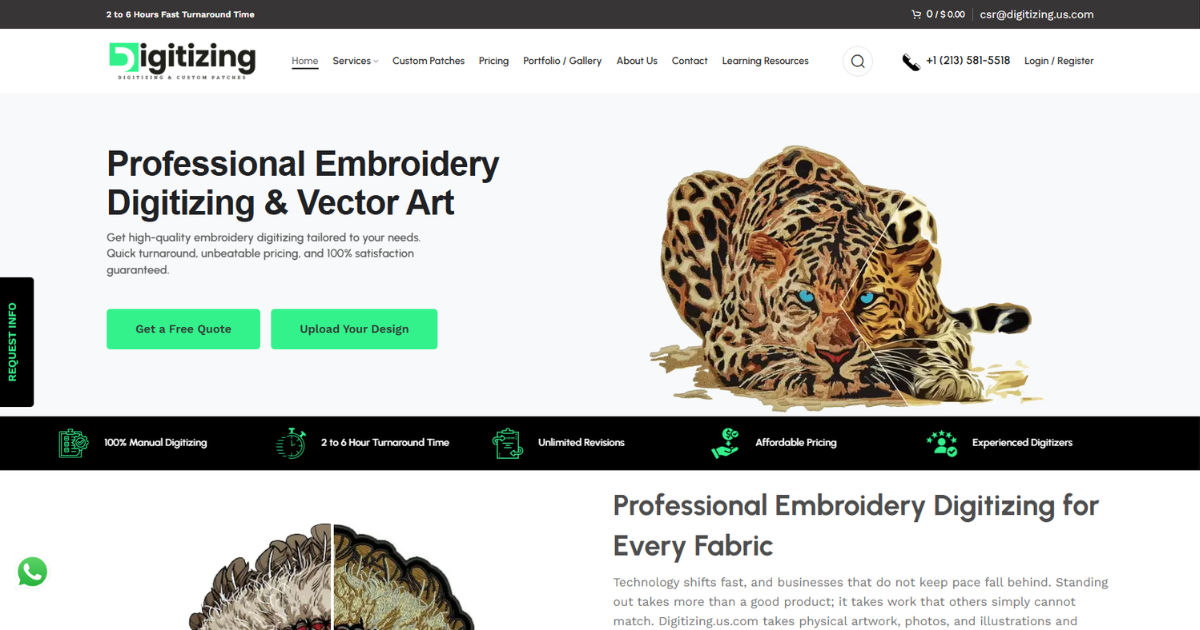
In this guide, we will explore how Online Embroidery Digitizing for custom patches is different from standard embroidery designs. We will break down the technical differences, design considerations, production methods, and quality factors in a simple and easy-to-understand way. By the end, you will clearly understand why custom patch digitizing requires a more specialized approach than standard embroidery designs.


Understanding Embroidery Digitizing Basics

Before comparing the two types, it is important to understand what digitizing actually means.

Embroidery digitizing is the process of converting artwork, logos, or designs into a digital stitch file that embroidery machines can read. This process involves mapping stitch types, directions, density, and sequence.

Online Embroidery Digitizing plays a key role here because it allows designers and businesses to send artwork online and receive professionally digitized files without needing in-house software or experts.

Standard embroidery digitizing is typically used for garments like shirts, hats, and uniforms. Custom patch digitizing, however, is used to create standalone patches that are later sewn or attached to fabric.


What Is Standard Embroidery Digitizing?

Standard embroidery digitizing refers to creating stitch files for designs that are directly embroidered onto garments or fabric surfaces.

In this method:

  • The fabric acts as the base
  • The stitches are applied directly onto clothing
  • The design must follow fabric movement and stretch

Online Embroidery Digitizing services are commonly used in this category because they allow quick turnaround and easy file sharing.

Standard designs are usually optimized for:

  • T-shirts
  • Caps
  • Jackets
  • Bags

Since the fabric provides natural support, less reinforcement is required in stitching.


What Is Custom Patch Digitizing?

Custom patch digitizing is a more specialized form of embroidery digitizing. Instead of stitching directly onto clothing, the design is created on a separate base material that becomes a patch.

These patches are then:

  • Sewn onto garments
  • Ironed on
  • Velcro attached

In Online Embroidery Digitizing, custom patches require extra planning because they are not dependent on garment fabric stability.

Patch digitizing includes:

  • Creating a clean border (merrow or satin edge)
  • Ensuring durability for standalone use
  • Adjusting stitch density for patch stiffness

Key Difference: Purpose of the Design

The biggest difference between custom patch digitizing and standard designs is the purpose.

Standard embroidery is designed to become part of a fabric item. Custom patches are designed to exist independently.

With Online Embroidery Digitizing, this difference becomes very important because digitizers must adjust:

  • Stitch flow
  • Underlay structure
  • Edge reinforcement

A standard design focuses on blending with fabric, while a patch design focuses on structure and durability.


Fabric vs Standalone Structure

Standard embroidery relies heavily on the fabric beneath it. The fabric absorbs tension and supports stitches.

Custom patches do not have this advantage.

This is where Online Embroidery Digitizing techniques differ significantly:

Standard designs:

  • Depend on fabric stability
  • Use moderate stitch density
  • Require less border reinforcement

Patch designs:

  • Must hold shape independently
  • Require dense stitching
  • Need strong edge finishing

Without proper digitizing adjustments, patches can warp, fray, or lose shape.


Stitch Density Differences

Stitch density refers to how closely stitches are placed together.

In standard embroidery:

  • Density is moderate
  • Fabric helps maintain structure
  • Flexibility is important

In custom patches:

  • Density is higher
  • Structure must be firm
  • No fabric support is available

Online Embroidery Digitizing professionals adjust density carefully depending on patch size and complexity. Too much density can make patches stiff and cracked, while too little can make them weak.

This balance is critical in achieving high-quality results.


Edge Finishing: A Major Difference

One of the most noticeable differences is how edges are treated.

Standard embroidery:

  • No special border required
  • Edges blend into fabric

Custom patch digitizing:

  • Requires clean, sealed borders
  • Uses satin stitch borders or merrow edges
  • Must prevent fraying

In Online Embroidery Digitizing, edge creation is one of the most technical parts of patch design. A poorly digitized edge can ruin the entire patch.


Underlay Techniques in Both Methods

Underlay stitches are hidden foundation stitches that support the top design.

In standard embroidery:

  • Light underlay is used
  • Fabric already provides support

In patch digitizing:

  • Strong underlay is essential
  • Multiple layers may be used
  • Stability is a priority

With Online Embroidery Digitizing, underlay settings are carefully customized depending on whether the design is for clothing or patches.


Material Considerations

Standard embroidery depends on garment materials like cotton, polyester, or denim.

Custom patch digitizing uses:

  • Twill backing
  • Felt
  • Specialty patch fabrics

These materials behave differently under stitching.

Online Embroidery Digitizing must account for:

  • Material thickness
  • Heat resistance
  • Stitch penetration

Patch materials are chosen to maintain shape even after repeated use.


Design Complexity Differences

Standard embroidery designs often prioritize readability and softness.

Custom patches often allow more complexity and boldness.

In Online Embroidery Digitizing, digitizers adjust:

  • Color layering
  • Stitch direction
  • Detail resolution

Patches can include sharper outlines and more defined shapes because they are not stretched by garment movement.


Durability Requirements

Durability is more critical in patch designs.

Standard embroidery durability depends partly on garment care.

Custom patches must:

  • Resist peeling
  • Maintain shape
  • Handle repeated washing or handling

This is why Online Embroidery Digitizing for patches includes stronger stitch reinforcement and tighter structure planning.


Machine Settings and Production Differences

Embroidery machines behave differently depending on design type.

For standard designs:

  • Lower tension settings may be used
  • Faster stitching speeds

For patches:

  • Higher precision settings
  • Slower, more controlled stitching

With Online Embroidery Digitizing, files are optimized to match machine behavior, ensuring consistent output.


Time and Cost Differences

Standard embroidery digitizing is generally faster and cheaper.

Custom patch digitizing is more detailed and takes longer.

Reasons include:

  • Additional border creation
  • Higher stitch density
  • More testing required

In Online Embroidery Digitizing, pricing reflects the complexity of patch design work.


Quality Control Factors

Quality control is crucial in both types but differs in focus.

Standard embroidery checks:

  • Stitch alignment
  • Color accuracy

Custom patch checks:

  • Edge integrity
  • Shape retention
  • Stiffness balance

Online Embroidery Digitizing services often include preview files so clients can approve designs before production.


Common Mistakes in Standard vs Patch Digitizing

Standard embroidery mistakes:

  • Poor thread matching
  • Low resolution conversion
  • Improper stitch direction

Patch digitizing mistakes:

  • Weak borders
  • Incorrect density
  • Lack of structural support

Using Online Embroidery Digitizing reduces these risks by allowing expert review and correction.


Why Patch Digitizing Requires More Skill

Custom patch digitizing demands higher expertise because it involves engineering a self-supporting structure.

Digitizers must think about:

  • Physical strength
  • Visual design
  • Machine behavior

Unlike standard embroidery, patch work cannot rely on fabric stability.

This makes Online Embroidery Digitizing for patches more specialized and detail-oriented.


Advantages of Online Embroidery Digitizing

Both methods benefit from digital services, but patches especially gain advantages such as:

  • Faster turnaround time
  • Easy revisions
  • Professional quality control
  • Global access to experts

With Online Embroidery Digitizing, businesses can scale production without investing in expensive in-house tools.


Industry Applications

Standard embroidery is widely used in:

  • Corporate uniforms
  • Sportswear
  • Promotional apparel

Custom patch digitizing is used in:

  • Military badges
  • Fashion branding
  • Motorcycle clubs
  • School emblems

Each use case requires different Online Embroidery Digitizing strategies for optimal results.


Future of Embroidery Digitizing

The future of Online Embroidery Digitizing is becoming more automated and AI-assisted. However, patch digitizing will still require human expertise due to its structural complexity.

We may see:

  • Smarter stitch prediction tools
  • Better simulation software
  • Faster cloud-based editing

Even with automation, custom patch design will remain a skill-based craft.


Conclusion

Understanding the difference between custom patch digitizing and standard embroidery designs is essential for anyone working in apparel customization or textile branding.

Standard embroidery focuses on direct fabric decoration, while custom patch digitizing focuses on creating independent, durable, and structured designs. This difference affects everything from stitch density to edge finishing and material selection.

Online Embroidery Digitizing plays a crucial role in both methods by providing accessible, professional, and accurate digitizing services. However, patch digitizing requires a higher level of precision, planning, and technical expertise because it must stand alone without fabric support.

In simple terms, standard embroidery is about decoration, while custom patch digitizing is about construction. One blends into fabric, while the other becomes a separate identity piece.

As the embroidery industry continues to evolve, Online Embroidery Digitizing will remain the backbone of both methods, helping designers turn creative ideas into high-quality stitched reality.

Continue Reading