
When working with Website AEO and GEO Checker, one of the most powerful modern SEO strategies you will encounter is topic clustering.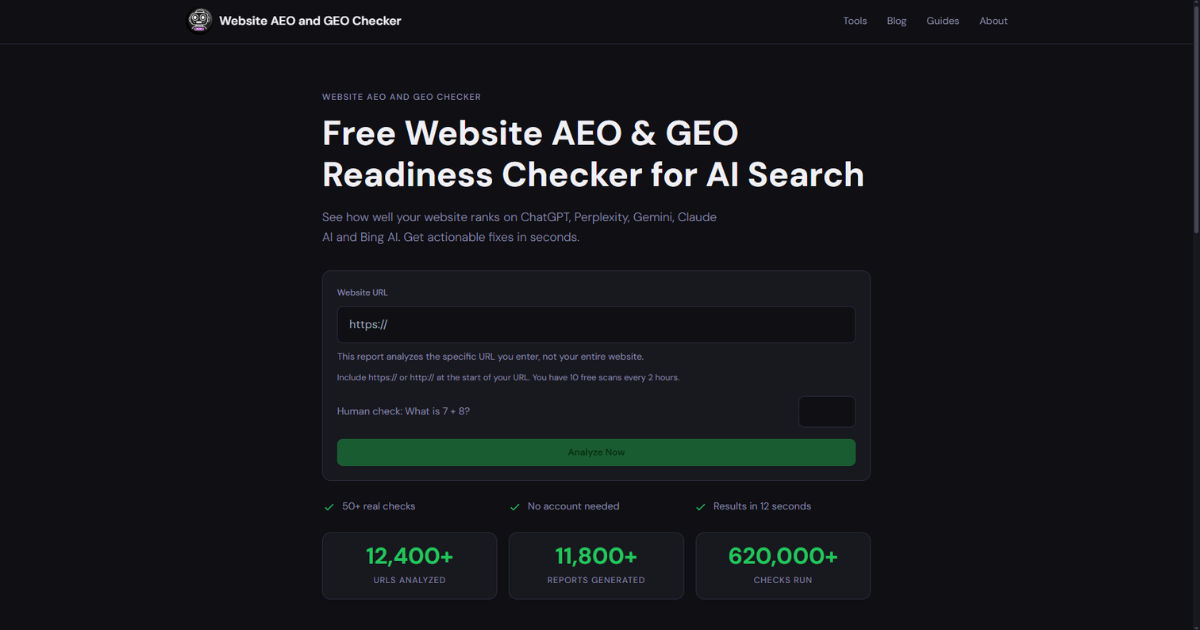
In today’s digital world, search engines no longer reward random keyword-stuffed pages. Instead, they prefer well-organized content structures that clearly show expertise, relevance, and depth. This is exactly where topic clusters come in.
In this guide, we will explore why topic clusters matter for AEO (Answer Engine Optimization), how they improve website authority, and how beginners can use them effectively to grow visibility and traffic.
Throughout this article, the concept of Website AEO and GEO Checker will be used as a reference point to understand how structured content can improve search performance and content clarity.
Website AEO and GEO Checker in Simple Terms
Before diving into topic clusters, it’s important to understand the foundation.
AEO (Answer Engine Optimization) focuses on optimizing content so that search engines and AI systems can directly pull answers from it. GEO (Generative Engine Optimization) focuses on improving visibility in AI-generated responses and summaries.
A Website AEO and GEO Checker helps evaluate how well your content is structured for both search engines and AI-driven platforms. It checks whether your pages are optimized for clarity, relevance, internal linking, and semantic structure.
Using Website AEO and GEO Checker tools ensures your content is not just readable for humans but also understandable for AI systems that generate answers.
What Are Website AEO Topic Clusters?
Topic clusters are a content organization model where a central “pillar page” is supported by multiple related subtopics.
A typical structure looks like this:
- Pillar Page (Main topic)
- Cluster Content (Supporting articles)
- Internal Links (Connecting all pages)
For example, if your main topic is SEO, your cluster might include:
- On-page SEO
- Technical SEO
- Keyword research
- Link building strategies
A Website AEO and GEO Checker often identifies whether your content follows this structure effectively.
Why Topic Clusters Matter for AEO
Search engines and AI tools prefer structured knowledge systems. Topic clusters help you build that structure.
Better Understanding for AI Systems
AI models rely on context. When your content is organized into clusters, tools like Website AEO and GEO Checker can easily interpret relationships between pages.
This improves:
- Content relevance
- Answer accuracy
- Topic authority signals
Improved Answer Engine Visibility
AEO is about getting featured in direct answers. When your content is clustered, it becomes easier for search engines to extract meaningful answers.
Using Website AEO and GEO Checker helps ensure your cluster content is properly optimized for this purpose.
How Topic Clusters Improve SEO Performance
Topic clusters are not just for organization—they directly impact rankings.
Stronger Internal Linking Structure
Internal links help search engines crawl your site efficiently. Topic clusters naturally create a web of related links.
A Website AEO and GEO Checker evaluates whether these links are properly structured or missing.
Higher Domain Authority Signals
When multiple articles support a central pillar page, search engines see your website as an authority on that subject.
This is why Website AEO and GEO Checker tools often recommend building clusters instead of standalone posts.
Reduced Keyword Cannibalization
Without clusters, multiple pages may compete for the same keyword. Clusters solve this by assigning clear roles to each page.
Building Effective Website AEO Topic Clusters
Creating topic clusters requires planning. Here is how to do it step-by-step.
Step 1: Choose a Core Topic
Your pillar page should focus on a broad topic like:
- Digital marketing
- SEO strategies
- Content optimization
A Website AEO and GEO Checker can help identify whether your chosen topic has enough subtopics for clustering.
Step 2: Research Subtopics
Break your main topic into smaller, specific questions or ideas.
For example:
Main topic: SEO
Subtopics:
- What is keyword research?
- How does on-page SEO work?
- What is technical SEO?
Each of these becomes a cluster article connected to the pillar page.
Step 3: Build a Pillar Page
The pillar page should be detailed and cover all subtopics briefly while linking to deeper articles.
A Website AEO and GEO Checker ensures your pillar page is structured properly with headings, clarity, and semantic depth.
Step 4: Create Cluster Content
Each subtopic becomes its own article. These should be more detailed than the pillar page section covering them.
For best results, ensure every cluster page is optimized using Website AEO and GEO Checker.
Step 5: Interlink Everything
Link all cluster pages back to the pillar page and to each other where relevant.
This strengthens topical authority and improves crawlability.
Role of Website AEO and GEO Checker in Topic Clusters
A Website AEO and GEO Checker plays a critical role in evaluating how well your clusters are structured.
Content Structure Analysis
It checks whether your headings, paragraphs, and sections are properly organized for AI understanding.
Semantic Relevance Testing
It evaluates whether your cluster content actually supports the main topic or drifts away.
AI Answer Readiness
One of the most important features of a Website AEO and GEO Checker is determining whether your content can be used in AI-generated answers.
Common Mistakes in Topic Clusters
Many beginners misuse topic clusters. Here are common mistakes to avoid.
Creating Weak Pillar Pages
A pillar page should not be short or shallow. It must provide a complete overview.
A Website AEO and GEO Checker will flag weak pillar pages as low authority.
Not Using Internal Links Properly
Without internal links, clusters lose their structure.
Always ensure your cluster pages connect logically.
Overlapping Topics
Writing multiple pages on the same keyword confuses search engines.
A Website AEO and GEO Checker helps identify duplication and overlap.
Benefits of Website AEO Topic Clusters
Using topic clusters provides long-term SEO advantages.
Increased Organic Traffic
Structured content ranks better, leading to more visibility.
Better User Experience
Readers can easily navigate between related topics.
Higher Engagement Rates
When users find organized content, they stay longer on your site.
A Website AEO and GEO Checker helps maintain this structure consistently.
Topic Clusters and AI Search Engines
Modern search is increasingly driven by AI systems. These systems prefer structured data.
Topic clusters help AI:
- Understand relationships between topics
- Extract precise answers
- Recommend authoritative sources
A Website AEO and GEO Checker ensures your content is AI-ready and optimized for generative search engines.
Advanced Strategies for Topic Clusters
Once you understand the basics, you can move to advanced optimization.
Semantic Keyword Grouping
Instead of focusing on one keyword, group related terms together.
A Website AEO and GEO Checker helps identify semantic keyword gaps.
Content Depth Optimization
Each cluster should go deep into its topic, not just scratch the surface.
Depth improves ranking potential significantly.
Continuous Content Updates
Clusters should be updated regularly to stay relevant.
A Website AEO and GEO Checker can highlight outdated content that needs refreshing.
Real Example of Topic Clustering
Let’s say your website focuses on digital marketing.
Pillar Page:
Digital Marketing Guide
Cluster Pages:
- SEO Basics
- Social Media Marketing
- Email Marketing Strategies
- Paid Advertising Tips
Each page connects back to the pillar page and supports it.
A Website AEO and GEO Checker ensures this structure is optimized for search engines and AI systems.
Future of Topic Clusters in SEO
As search engines evolve, topic clusters will become even more important.
AI-driven search will rely heavily on structured content, making tools like Website AEO and GEO Checker essential for optimization.
Websites that use topic clusters will have a clear advantage in visibility, ranking, and AI-generated answers.
Conclusion
Topic clusters are one of the most effective strategies in modern SEO and AEO. They help organize content, improve internal linking, and build strong topical authority. When combined with tools like Website AEO and GEO Checker, they become even more powerful by ensuring your content is structured in a way that both search engines and AI systems can easily understand.
By using topic clusters, you are not just creating content—you are building a knowledge system that strengthens your website’s authority over time. This leads to better rankings, improved user experience, and higher chances of appearing in AI-generated answers.
For beginners, the key is simple: start with one strong pillar page, build supporting cluster content, and continuously optimize everything using Website AEO and GEO Checker.
As search continues to evolve, websites that adopt topic clustering early will stay ahead of the competition and dominate both traditional and AI-powered search results.